
Building AI Pipelines with n8n, MCP and Claude Code
Building AI pipelines with n8n, MCP and Claude Code replaces bespoke orchestration scripts with a maintainable workflow layer. This guide covers why n8n suits event-driven AI work better than Airflow, how the Model Context Protocol standardises tool access, and the cost and versioning controls production needs.
Most AI orchestration starts as a Python script. It grows, absorbs retry logic and branching, and eventually becomes 2,000 lines that one engineer understands. When that engineer is unavailable and it breaks, recovery takes days. One such breakdown cost three days — not because the fix was hard, but because reconstructing the intended behaviour was.
Why n8n Over Airflow or Prefect
Airflow and Prefect are excellent at what they were built for: scheduled batch workloads with dependency graphs. AI pipelines are usually neither scheduled nor batch. They are triggered by events — a document uploaded, a ticket created, a webhook fired — and they need to branch on model output.
n8n is event-driven and visual, with webhook triggers as a first-class concept and a large library of integrations. The visual part is not cosmetic: a workflow another engineer can read without a walkthrough is the difference between maintainable and load-bearing-on-one-person. Self-hosting on Kubernetes with PostgreSQL for state and Redis for queueing keeps data in your own environment.
n8n is the wrong tool for tight loops, heavy computation, or anything needing millisecond latency. Those belong in a service that n8n calls.
A Real Workflow: Content Processing
A representative shape: a webhook receives a document, n8n calls a FastAPI classification endpoint, and the response drives what happens next. The service summarises, generates embeddings and writes them to a vector index; n8n routes results to Slack for review or to a spreadsheet for tracking, depending on classification.
Pydantic models on the FastAPI side define the contract in both directions. That typed boundary is what keeps the workflow readable — each n8n node deals in known shapes rather than untyped JSON.
MCP: Standardising Tool Access
The Model Context Protocol solves a problem that gets expensive quietly: every LLM integration reimplementing the same tool access. MCP defines tools once, in a server, and any compliant client can use them.
Three tools cover a large share of support and knowledge use cases: knowledge base search (top-k of 5 documents), customer context retrieval (the last 5 interactions), and ticket creation. Defined once in an MCP server, they serve every model and every pipeline that needs them.
Version your MCP tools. Changing a tool's signature breaks every consumer at once. Running old and new versions in parallel during migration turns a breaking change into a routine one.
Claude Code as the Intelligent Glue
Claude Code fills the gap between "workflow calls an API" and "workflow needs judgement". With persistent codebase context and access to MCP tools, it handles code generation and pull request review as an autonomous step inside a pipeline rather than as a developer-side convenience.
Model selection matters for cost and consistency — pinning a specific model version (for example claude-sonnet-4-20250514) rather than an alias means behaviour does not shift underneath a running pipeline.
Putting the Three Together
Lessons From Six Months in Production
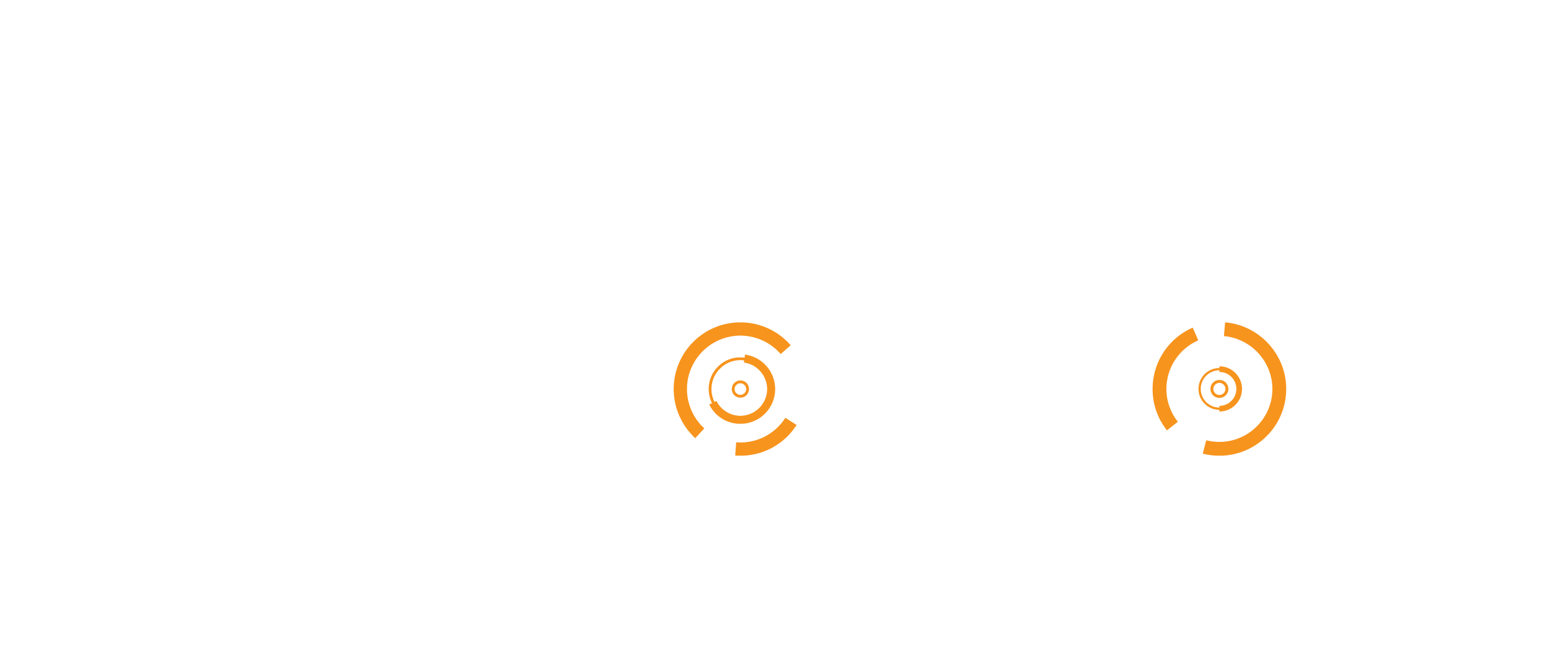
An end-to-end customer insight pipeline shows the division of labour clearly: an event triggers the n8n workflow, MCP tools fetch the customer's history and relevant knowledge base articles, Claude analyses the combined context and returns structured output — sentiment on a −1.0 to 1.0 scale, five to eight extracted keywords, a recommended action — and n8n routes the result to Slack.
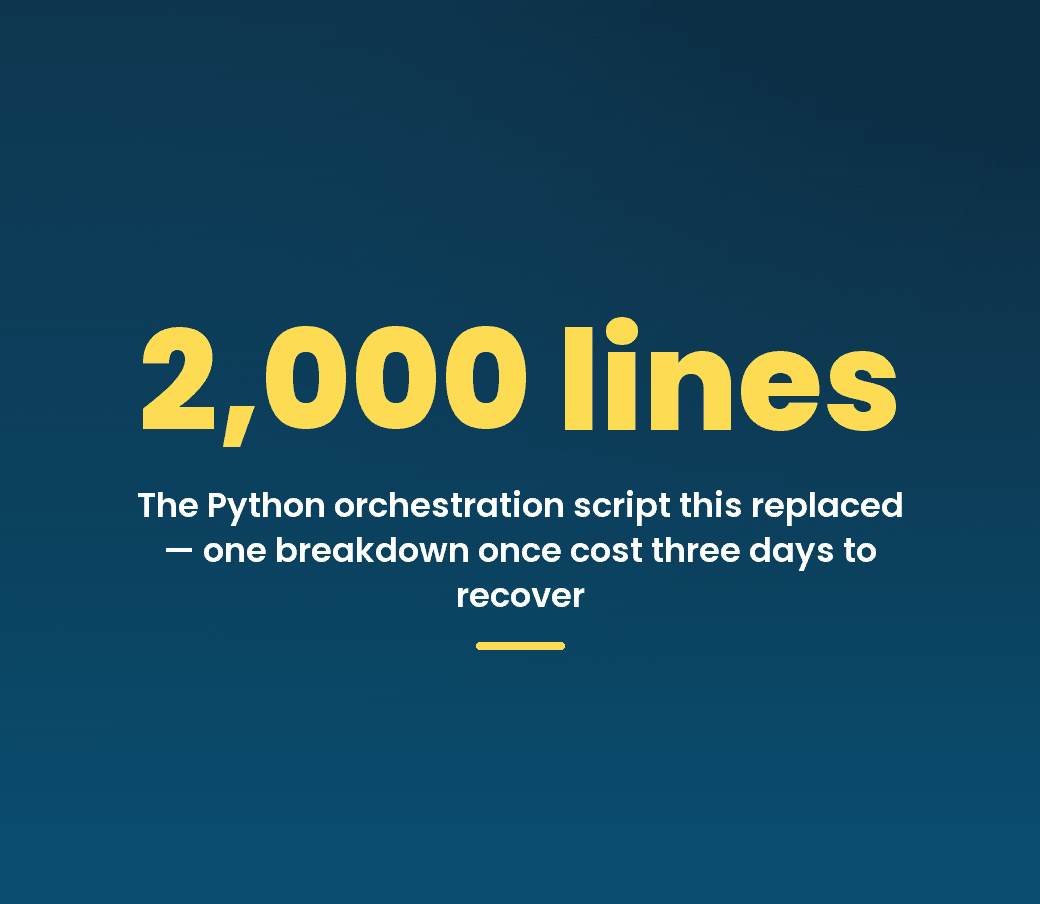
Each layer does one thing. n8n orchestrates and routes. MCP provides consistent tool access. The model supplies judgement. Nothing in the pipeline is a 2,000-line script.
The migration's real return was not performance. It was that pipelines became something a team could maintain rather than something one person could.
We build production AI pipelines and the orchestration around them. Explore our AI agent development services or get in touch.
Explore Our Services
Ready to turn these ideas into working software? Our engineering team can help.
AI Agent Development
Autonomous AI agents that automate workflows and scale your operations.
Learn more →Generative AI Development
Custom LLM copilots, content engines and RAG systems built for production.
Learn more →AI Enterprise Integration
AI that plugs into your existing ERP, CRM and procurement stack — integration, not rip-and-replace.
Learn more →All AI & Software Services
Explore our full range of AI, web, cloud and custom software engineering.
Learn more →Start a Project
Book a free discovery call and scope the highest-ROI build for your business.
Learn more →